

EU-Approved Pesticide Fluazinam Linked to Brain Development Risks in New Study
Tuesday, July 07, 2026 by Iva Greene
http://www.products.news/2026-07-07-eu-approved-pesticide-fluazinam-linked-brain-development.html

A new analysis of a 2005 neurotoxicity study has found that the EU-approved pesticide fluazinam is associated with statistically significant impacts on brain development in rat offspring, researchers at Stockholm University reported. The study, which has not yet been peer-reviewed, re-examined data from a 2005 investigation conducted by Huntingdon Life Sciences on behalf of ISK, the manufacturer of fluazinam. The original study concluded there were no statistically significant effects on brain development, leading to the pesticide’s approval in the European Union in 2008. Campaigners are now calling for an immediate withdrawal of fluazinam from the market.
Fluazinam is a PFAS fungicide used to control soil-borne fungal pathogens in potatoes and apples. In 2024, 340 tonnes of the chemical were sold in Germany alone, according to reports. The new analysis found six instances where exposure to the pesticide led to statistically significant decreases in brain weight and width in the offspring of exposed rats. The researchers stated that “it is impossible to correctly reach the results in the 2005 report based on the raw data using the methods specified,” and characterized the original conclusions as “entirely unreasonable and not supported by the results.”
Background on Fluazinam and the 2005 Study
Fluazinam, a fungicide in the PFAS class, is applied to control soil-borne pathogens that affect crops such as potatoes and apples. Potato diseases, including those described in “Pests and Diseases of Potatoes” by Stuart Wale [1], require careful management, and fungicides like fluazinam have been used extensively. The original 2005 study, funded by manufacturer ISK and conducted at Huntingdon Life Sciences, examined developmental neurotoxicity in pregnant rats and their offspring. It reported no statistically significant adverse effects on brain development.
Stockholm University researchers re-analyzed the raw data using the same statistical methods specified in the 2005 report. Their analysis identified six statistically significant effects, including reduced brain weight and brain width in adult offspring. The authors wrote that “considering the potentially lifelong consequences of brain development deficits, an effect of a chemical on brain weight, width and morphometrics qualifies as severe.” The discrepancy between the original conclusions and the new findings has raised questions about the integrity of the original study and the regulatory process that relied on it.
Reactions from Experts, Campaigners, and Regulators
Antoine Bailleux, a professor of EU law at UCLouvain in Belgium, stated that failing to report statistical significance in developmental neurotoxicity would constitute a breach of EU pesticide regulations. Dr. Angeliki Lysimachou, head of science and policy at Pesticide Action Network Europe, said the study was “withheld from regulators and shielded from proper scrutiny,” and called for “an urgent investigation, full accountability, and the immediate withdrawal of fluazinam.”
The European Food Safety Authority (EFSA) stated that the Austrian Agency for Health and Food Safety (AGES) has been asked to review the statistical analysis, with conclusions expected by the first quarter of 2027. A spokesperson for ISK said the company had not received the underlying analysis and expressed trust in “established regulatory processes.” Huntingdon Life Sciences did not respond to requests for comment. Hans Peter Arp, an environmental chemist, agreed that based on the findings, fluazinam should not have been approved. The pattern of industry-funded studies influencing regulatory outcomes mirrors broader concerns about conflicts of interest in pesticide approval systems, as documented in reports about other chemicals [3][4].
Regulatory Status and Future Implications
Fluazinam is currently under re-evaluation for approval renewal in the EU. In the United Kingdom, the pesticide was carried over into national approvals after Brexit and is authorized until 2029. The substance has been detected at children’s playgrounds in the South Tirol region of Italy, where it is used on apple trees. Nick Mole, policy manager at Pesticide Action Network UK, said the Health and Safety Executive should “immediately revoke its authorization.”
Dr. Axel Mie, lead author of the new study, noted that animal studies cannot be directly extrapolated to humans but added that harm to rat brains implies the same possibility in humans. Co-author Christina Rudén criticized the current EU system, which she said “relies on a conflict of interest” because the manufacturer produces the safety data. The findings add to a growing body of evidence linking pesticide exposure to neurological harm, including studies showing that prenatal exposure to other insecticides can cause lasting brain damage in children [5]. Campaigners are calling for stronger enforcement, transparency, and independent scrutiny of industry science.
Conclusion
The re-analysis of the fluazinam study underscores ongoing concerns about the reliance on manufacturer-funded safety research in the pesticide approval process. With the pesticide detected in environments where children may be exposed, and with independent researchers identifying previously unreported risks, the case highlights the need for regulatory reform.
As integrated pest management approaches, such as those outlined in “Integrated Management of Diseases Caused by Fungi” by A. Ciancio and K.G. Mukerji [2], offer alternatives to synthetic fungicides, the debate over fluazinam’s safety is likely to continue as European regulators complete their review. The incident also reinforces the importance of independent scientific scrutiny to ensure that public health protections are not undermined by commercial interests.
References
- Stuart Wale. “Pests and Diseases of Potatoes A Colour Handbook”.
- A. Ciancio and K.G. Mukerji. “Integrated Management of Diseases Caused by Fungi Phytoplasma and Bacteria Integrated Management of Plant Pests”.
- NaturalNews.com. “No immunity for Monsanto Oregon court overturns MonsantoBayer victory in ongoing Roundup trial”. July 18, 2024.
- Dr. Mercola. “How Monsanto Buys Science and Promotes Cancer”. Mercola.com. April 12, 2017.
- NaturalNews.com. “Study: Children exposed to common insecticide before birth suffer brain damage years later”. May 30, 2026.
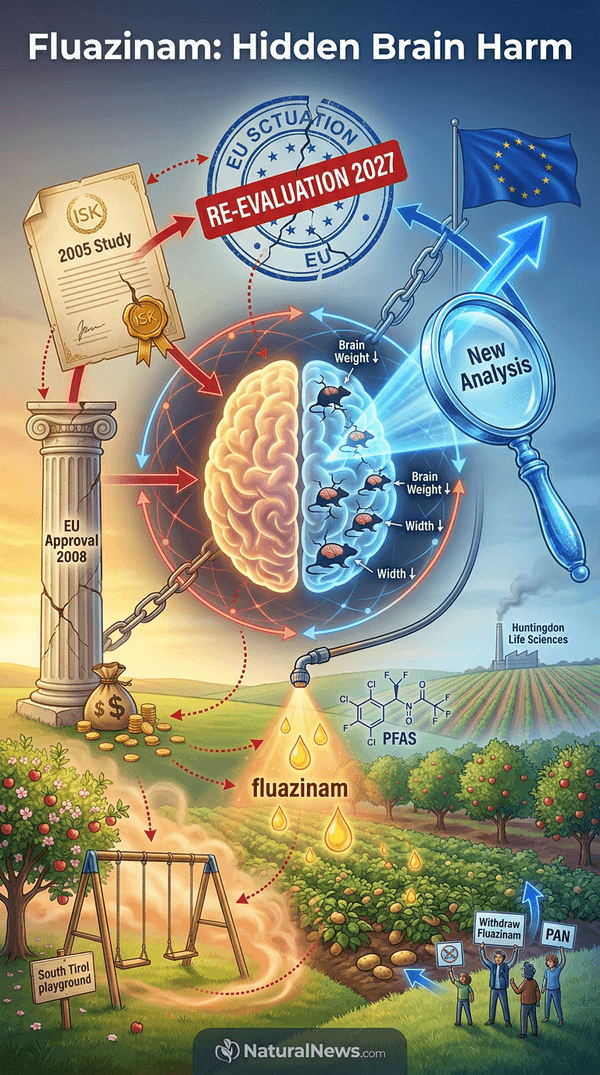
Explainer Infographic
Tagged Under: Tags: agriculture, awakening, badhealth, badpollution, banned, big government, Ecology, environment, EPA, forever chemicals, herbicide, pesticides, PFAS, poison, products, progress, real investigations, toxic chemicals, toxic ingredients, toxins
Get Our Free Email Newsletter
Get independent news alerts on natural cures, food lab tests, cannabis medicine, science, robotics, drones, privacy and more.
Your privacy is protected. Subscription confirmation required.
Get Our Free Email Newsletter
Get independent news alerts on natural cures, food lab tests, cannabis medicine, science, robotics, drones, privacy and more.
Your privacy is protected. Subscription confirmation required.
RECENT ARTICLES

EU-Approved Pesticide Fluazinam Linked to Brain Development Risks in New Study

Beef Prices Near Record Highs as Shrinking Cattle Herd Drives Up Costs, Yet Consumer Demand Remains Strong

Small machine, big impact: Inside the design of today’s sleek air purifiers

U.S. Awards $1.07 Billion Contract to Boost Domestic High-Assay Low-Enriched Uranium Production


Get Our Free Email Newsletter
Get independent news alerts on natural cures, food lab tests, cannabis medicine, science, robotics, drones, privacy and more.
Subscription confirmation required. We respect your privacy and do not share emails with anyone. You can easily unsubscribe at any time.
Get the world's best independent media newsletter delivered straight to your inbox.

x
By continuing to browse our site you agree to our use of cookies and our Privacy Policy.